Writing Queer Experiences as a Bisexual
It took me a while to work out why I’m bad at writing queer experiences. After all, I’m bi. I qualify as queer. I am the B in LGBTQ. I should be farting rainbows and sneezing glitter and flying the flag as well as the rest of them, and perhaps the fact that I’m not is evidence of some kind of failure to be properly queer. That’s the feeling I’ve always had.
But it turns out I’m bad at writing queer experiences because, until recently, my experience of being bisexual has been erasure.
As a bisexual individual, I’ve faced three consistent reactions to my sexuality:
Nobody cares
Open hostility (often from the L folk)
Appropriation of sexuality (from straight men who assume they would be invited and see it as an opportunity)
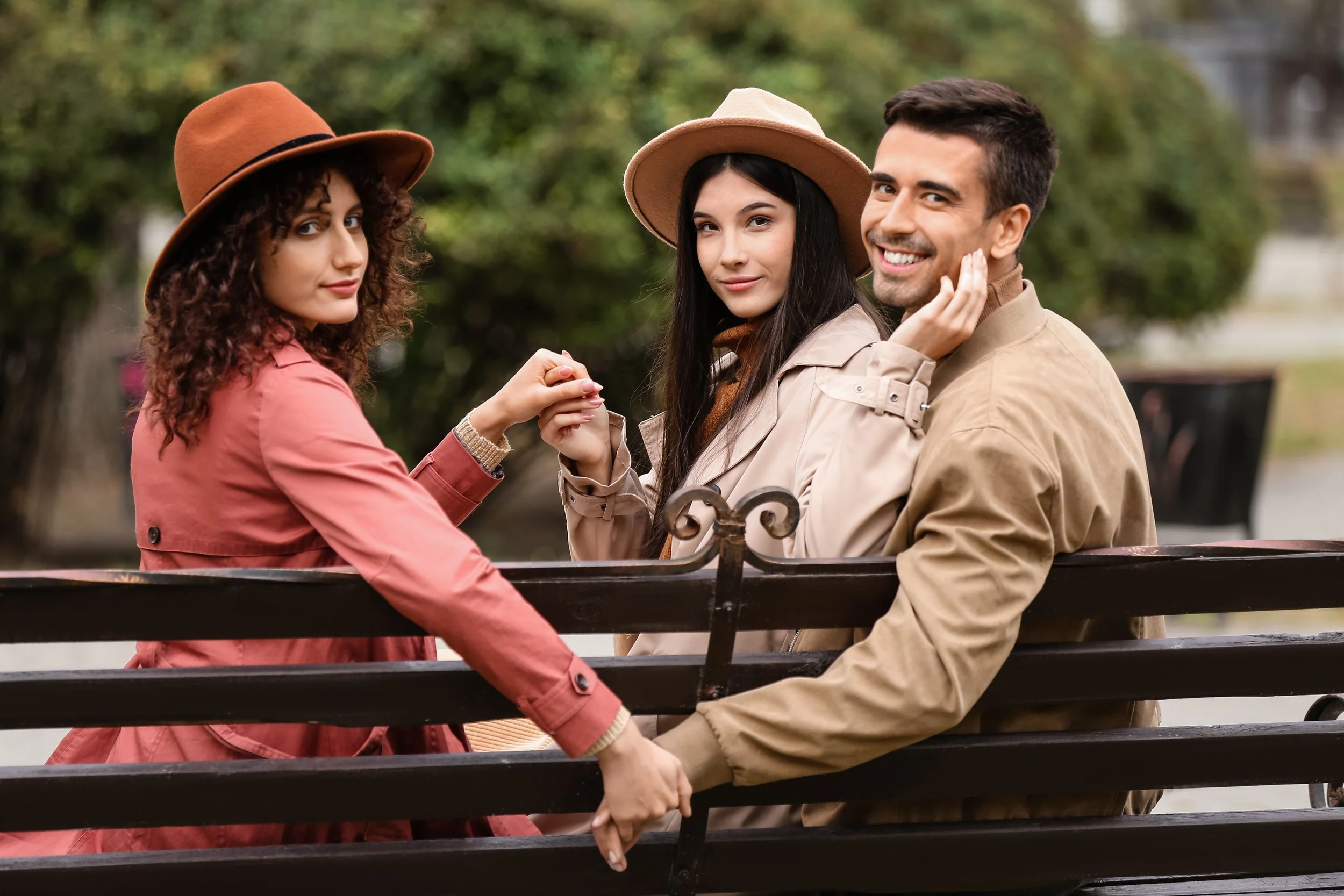
In most instances bisexual relationships are portrayed as threesoms, which are mostly two women with one guy.
What this means is that far from having a community to join where I could go and find my people and bask in the glory of my queer identity, I was left with nothing. Literally nothing. There was nowhere to go and “be bi” when I wasn’t welcome in predominantly L and G spaces. Instead I was left outside. And this is not an unusual experience. Erasure is typical and leads to high rates of anxiety, depression and suicidality in the bi population. Because the conclusion is that you’re not straight, you’re not gay, you’re kind of wrong everywhere, and wherever you go you need to just not be… that.
When I read queer literature that centres queer characters on their queer journeys, I’ve always felt a bit awkward. Like… I’m not gay enough for this. And honestly I wouldn’t know where to start if I had to write one myself because, despite being queer, that’s not MY experience.
Until very recently, my experience was that nobody cares, or will be hostile or creepy if they do.
As a result, my stories are full of queer characters, and there is absolutely no overt “queer experience” to be found. They are gay or bi and that’s that. Moving on.
Inevitably, this means that I don’t count as an “LGBTQ writer” because I’m not writing “LGBTQ experiences”… except that I am. It’s a bisexual experience. But like all bisexual experiences, it’s “not queer enough” to qualify in spaces where LGBTQ people are supposed to be celebrated. Because nothing squashes the party mood like a person wandering in and awkwardly muttering about how it doesn’t matter anyway, feeling anxious about joining in, and ultimately wanting to turtle.
And NOTHING threatens L and G spaces like a bi person who might be in a relationship with someone of the opposite gender. Straight people in gay spaces are often welcome guests because they’re allies. However, bi people in relationships with people of the opposite gender are treated like suspicious intruders wrongfully under the impression that they can have their cake and eat it too.
It’s difficult to write queer-centric stories when you’ve never been allowed to centre your queerness.
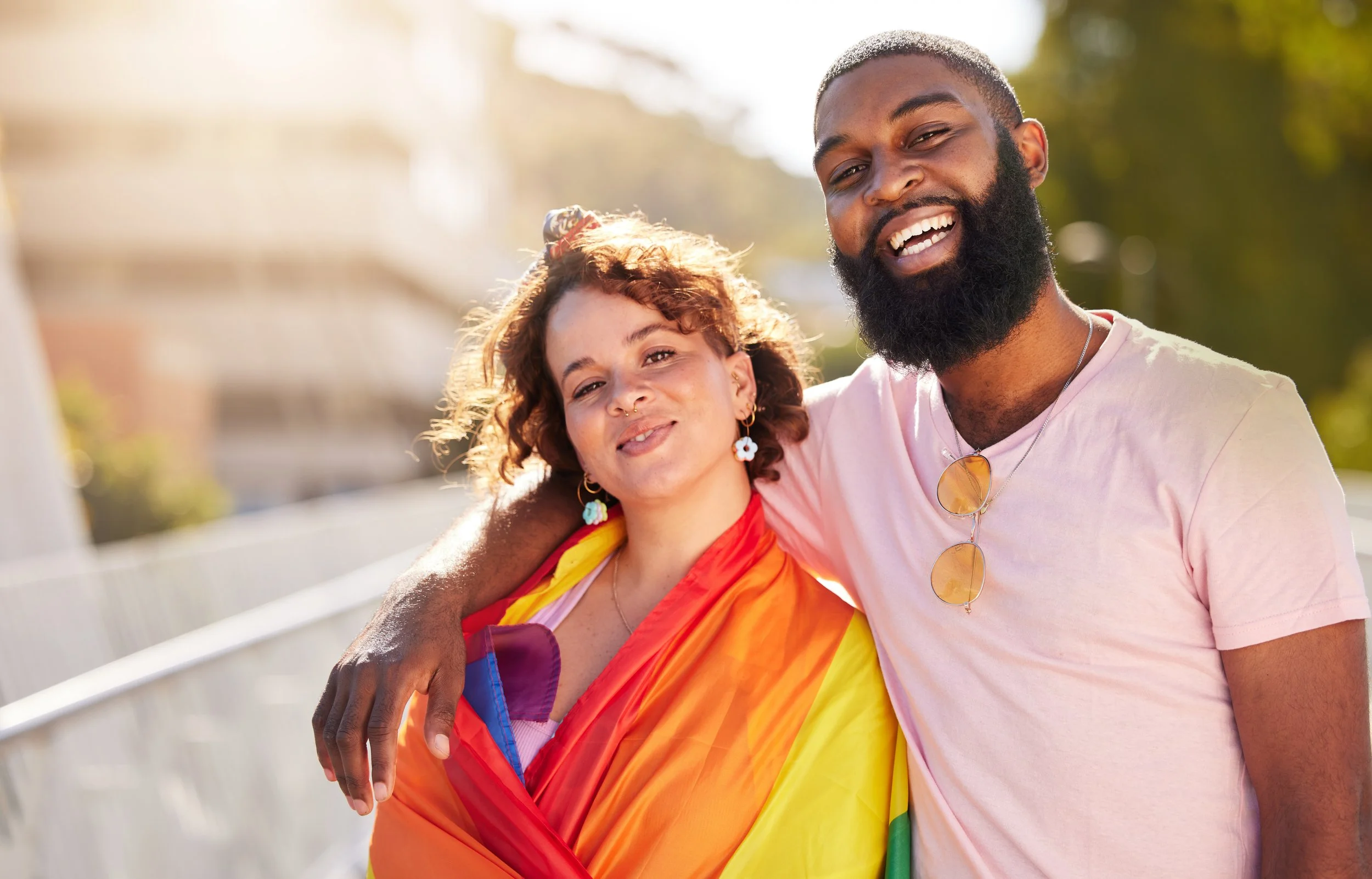
If she wasn’t wearing a flag, you’d assume they’re a straight couple. And THAT’s the problem. It basically means you spend your life “coming out” again and again and again and again… or not, and just being invisible.
In my audio drama, The Dex Legacy, Ren is bisexual and in a deep and consuming relationship with Isra, who is not. For many people, his sexual identity is, therefore, eclipsed by his female love interest. As a result, I can’t claim to be writing about queer experience.
But, again, this is bi experience.
And it’s a very underrepresented bi experience.
Because, in order to “show not tell”, bi characters are typically shipped with multiple people of different genders at some point during their stories, and in doing so, they’re often portrayed as promiscuous, untrustworthy, or downright villainous. The bi experience is therefore tied to duality rather than wholeness, and almost never associated with lasting, settled relationships or deep romances.
So in writing a bi male person in a lasting and meaningful relationship with a female person, I have failed to write queerness. Despite that being a legitimate queer experience.
Knowing all of this makes me sad, but it also makes me fiercely protective of my approach. If my portrayal of queerness doesn’t fit alongside the style defined by L and G folk, that’s because it’s a very B portrayal. And if that means decentered and barely noticeable queerness, then it’s still legitimate. And if that erasure feels wrong or uncomfortable to you, then perhaps find a way to accept and celebrate bi people more.