Writing Sexual Assault - Things to Remember
Before we start I’d like to make something clear. This will not be a cheat sheet, because there are no cheat sheets for this. Instead, it will provide useful perspectives and questions to ask yourself about your characters, and some important recommended reading/watching.

Sexual assault is a topic that’s famous for being badly done by male writers. It’s often inserted into stories to provide motives for male characters, or create drama and tension that serves the plot while somehow not affecting the victim/survivor character at all.
This approach cheapens the reality, it minimises the impact, and it contributes to the general malaise of disregard for female safety and autonomy that women navigate and deal with on a daily basis. After all, if a female character can just have a little cry and get over it, it can’t be too bad… right? Not worth going to the police about. Not worth “ruining a man’s life” over… right?
Any contribution to this rhetoric goes towards perpetuating these views and it’s not just problematic, it’s damaging. It’s a falsehood that writes criminals into freedom, and victims/survivors into silence every single day.
So first thing’s first, if you’re not prepared to think hard, ask yourself some pretty big questions, and do some reading, don’t write about it at all. Just don’t. You don’t have the right. We’re talking about a fundamental violation of a human being’s body here. However it plays out, it needs to be dealt with intelligently and with integrity.
What is Sexual Assault?
Let’s start with the fundamentals re. rape. Rape, be it with a penis or other penetrative item, is qualitatively not sex. It is an invasion of a person’s body in addition to a breach of consent.
It is a recognised method of torture.
It is also a tool of colonisation used to subjugate populations, assert dominance over regions, and dismantle social structures. As such, it isn’t just a byproduct of war but part of the process.
As a tool for subjugation and control - which is often the motivation in patriarchal societies - it is used to assert dominance and/or ownership.
In conclusion, rape reduces a human being to the status of “thing”, or “property”.*
However they try to justify it later, a rapist will either see a person they want to dominate/own, or they will stop seeing a person altogether and instead see a thing/body they want to use.
Why Write About Sexual Assault?
The obvious answer to this question is: because it happens.
And that is very fair. Sexual assault does happen. Far too often. We all know it. It’s so baked into our societal awareness that little girls start altering their behaviour to avoid unwanted male attention from a disturbingly young age. According to Rape Crisis England & Wales, 1 in 4 women and 1 in 18 men have been raped or sexually assaulted since the age of 16, and 1 in 6 children are sexually abused.**
Given the prevalence, it can be unrealistic to write about certain situations and not include it, and that’s why we’re here. To challenge you to approach the subject in a way that doesn’t do disservice to the character, the reader, or the story.
When to Avoid Writing Sexual Assault?
As soon as it’s gratuitous or being used as a plot device and nothing more, you should question your decision to include it. Under no circumstances should it be titillating for the reader, because it’s violence. If you wouldn’t portray torture as sexy, you shouldn’t portray sexual assault that way.
Additionally, sexual assault should not be thrown into a narrative just to make your work feel gritty and challenging because, in doing that, you’re using a character’s trauma as a means to an end. Which is dehumanising.
Only include Sexual Assault if you’re going to give it the time and space it needs to exist in the narrative, to live with the characters, and to impact their ongoing story in a genuine and plausible way.
If sexual assault is happening to side characters or unnamed characters, that still counts. Because treating those women as disposable/fair game is why real girls are taught to shout FIRE if they’re being attacked, instead of HELP. Everyone’s a main character in their own story, so think about the emotional impact of what’s happening to those women in that scene and make it real for them and your reader.
Ask yourself - would removing this event change my story in any way? If the answer is no, you should take it out.
The key to approaching any subject is empathy. So let’s talk about male sexual assault first.
Male Sexual Assault
Male sexual assault often goes unacknowledged, even when it’s clearly depicted in novels and shows. In Season 4 of The Boys, Hughie is literally tied up in a sex dungeon and has objects forcibly inserted into him. The emotional impact of that traumatic event isn’t recognised. Later, it turns out his girlfriend has been kidnapped and replaced by a shapeshifter, who he has sex with multiple times. When he finds out, he isn’t allowed to feel violated, instead he’s made to feel like he actively cheated on his girlfriend.
Consent = both parties understanding the conditions of their engagement and enthusiastically agreeing to those conditions. As soon as one of those conditions changes… or if it’s false to begin with… or if there’s coercion… or if one party is intoxicated and/or not in their right mind… there is no consent.
So no, Hughie did not consent to having sex with that shapeshifter, which means he was assaulted, and after finding out he should have been allowed to feel it. After all, knowing that someone has taken advantage of you and used your body for their own ends against your will is traumatic. A far better exploration of a very similar situation can be found in season 2 of Severance.
Unfortunately, the way Hughie’s story is handled is far more common.
I saw a show where a man had been in a horrific accident, was paralysed and non-verbal. The woman he was having an affair with came into the hospital and proceeded to give him a hand-job. That was assault and it was played for laughs. The male character didn’t want it, we knew that, and yet the situation was included as a comic side-story. This is absolutely not acceptable.
So why is male sexual assault rarely recognised?
Because, in our society, the narrative that must be maintained at all costs is that men are in control. And this is especially true if it’s a male/female dynamic. Masculine trumps feminine in our societal order to such a degree that the very idea that a woman could overpower or take advantage of a man is unthinkable and a base-level insult that fundamentally calls into question the victim/survivor’s masculinity.
This is reinforced by the myth that men always want sex, at all times, whenever and with whoever (even when paralysed and non-verbal). And supported by the ridiculous idea that an erection = consent, which, if you have a dick, you already know is bullshit.
And what does all of this lead to? Silence, shame, anxiety, depression, and possible suicide.
So don’t contribute to this problem. If your male character has experienced a non-consensual sexual encounter, allow him to feel the trauma. Write the ripples of that event. Be the source of validation that any man who has been through something similar would benefit from reading.
Female Sexual Assault
Now we’ve talked about male sexual assault and the principles of consent, we should look at how this situation can differ for women. Because, believe me when I say, the entire world looks different to women, and to do this subject justice you need to shift your viewpoint.
Male-lens writing inevitably curtails how well you can portray nuances in behaviour, and when a woman is moving through a patriarchal world and suffering as a result, nuance is all she’s allowed (and even that can be dangerous).
The Parallel World
Imagine the world your male characters walk through runs in parallel to the world your female characters walk through. When you cross over to the world your female characters inhabit, you need to be seeing threats, because you’re looking through the eyes of someone who has probably never had the physical-strength advantage in any situation. This leads to a level of vigilance that never goes away. Even if she can fight now, she wasn’t born that way and she would have spent years learning to inhabit this state of heightened awareness, and those lessons are hard to unlearn (and frankly, why would you? It’s a useful skill for people who get into a lot of fights).
The threats are everywhere and especially include the men around her - friends or not. If she passes a man or group of men going in the other direction, does she spend the next half hour glancing over her shoulder in case they noticed that she was alone and decided to make her a side quest? If her guy friends are laughing and joking, is she highly aware of the need to edit her behaviour so that her reactions won’t be mistaken as flirtatious? And later, when they get drunk, is she very conscious about where they’re putting their hands? If one is crossing boundaries, are her other friends noticing and choosing to do nothing or pretending not to, or is he being skillful in not being seen by them.
This inability to relax is called hyper-vigilance and it can be constant and exhausting. Yes, they’re her friends, but as friends have more opportunities and greater access, it’s often friends who perpetuate the violence.
So let’s say friendly drunkenness has crossed into persistent and unwanted attention. I guarantee that if she’s not utterly wasted, she’s going to be sobering up fast.
Why doesn’t she speak out?
There are multiple reasons but the main one comes down to the fact that if she openly accuses him, he will claim innocence, she will be doubted and suspected of lying, she will be ostracised from the group, and she may find herself alone and, therefore, more vulnerable.*** The question then becomes, is it worth it? When he’s sober he’s okay. Perhaps she can avoid him when he’s like this and not upset anyone, thus maintaining her place in the group? Perhaps she can talk to him tomorrow and lay down some boundaries? All of these questions will be running through her mind.
In the meantime she needs to pee and going off on her own right now might give him the opportunity he’s been waiting for, and asking another friend to go with her might be seen as “dramatic” - especially as the others are pretending to be oblivious, if not actually oblivious, and if there’s no concrete evidence to prove her reasoning she’s in danger of appearing manipulative and destructive to the group dynamic. Ever wondered why women go to the bathroom together? It’s strategic, and safe.
Of course, she may speak out. If this happens it will be because she trusts the others in the group to have her back. Or because she doesn’t care if she has to go it alone.
When she isn’t with friends
If she’s not surrounded by friends, the wider environment should become very clear. How many people are around? Do they look like people who could be approached? Do they look like people who might intervene? Do they look like people who might make the situation worse/join in? Where are the exits? What’s it like outside? Are there people? Is it quiet? If driving, how far away is the car? Is there a bathroom? Where is it? Is it close enough that people will notice if he follows her inside? Will they even care?
These assessments happen fast under pressure.
Deescalation
When a situation is escalating, most women will try to deescalate. This basically comes down to placating the man in order to keep him from forcing the situation or turning violent. It’s an indirect approach that involves a lot of smiling and looking relaxed while scoping for exits and watching for opportunities to leave. The fear is that as soon as he realises she’s not into it, things will get ugly. It’s a cautious dance with a potentially violent outcome if she loses her footing.
So smiling, laughing at his jokes, being just playful enough that he thinks she’s actually playing, all while looking for an escape, are typical behaviours.
She will also be highly aware of how firm his touch is, and how insistent he’s becoming. She’ll probably avoid getting into an actual embrace, if possible.
Ideally she wants him to believe her when she says “I just need to go to the bathroom and I’ll be right back.” If he does, he won’t follow her and she may be able to escape. If he doesn’t believe her, he will follow (if not into the bathroom, then to hang around outside), and that will make things difficult.
Acting Crazy
If she’s aware that she’s being followed by a stranger, it can be effective to start behaving erratically. Not drunk, because that might seem like an opportunity, but actually insane. Suddenly stopping and having an argument with a tree like it’s a human… randomly singing or laughing… muttering… making sudden movements that don’t make sense. The unsettling nature of insanity can throw a stalker off and I have heard of this tactic working.
Don’t forget, the person doesn’t know if it will work. They’re frightened, unsure, and their senses will be going crazy, all while pulling off a (hopefully) Oscar-worthy performance.
The relief when a stalker takes a different turn, or stops, feels like a sudden lightness in the whole body, but the vigilance never goes away.
Held at Gunpoint
Nobody knows what they would do if they were held at gunpoint, until it happens. Suggesting otherwise is silliness. However, I’ve been told that if a person pulls up in a car and points a gun at me and tells me to get in, I’m more likely to survive if I refuse, run, and take my chances with their (hopefully) rubbish aim, than if I comply. So, if your female character faces this scenario and is capable of thought, that might be something that runs through her mind. Better to run and hope, than get in and disappear.
In a Moving Vehicle
Women have escaped assault and probable murder by jumping out of moving vehicles since the invention of the carriage. If your female character is in this situation, she’ll be looking for grassy verges and tree cover. She will also be checking speed.
It’s a terrifying thing to contemplate, but it’s better than the alternative. And let’s face it, she doesn’t know how far the alternative will go. Sexual assault can be followed by murder, and the likelihood of that goes up if kidnapping is involved.
Verbal Appeals
This is reasonably straightforward. Asking the perpetrator nicely (often to avoid violence) is step one. Begging is step two. Women are often advised to tell their assailant that they’re on their period as this can trigger aversion. In very rare circumstances, telling them it’s happened before can trigger a withdrawal. “I can’t go through this again…” may be enough to take the excitement out of the situation, because they’re not the first. Which is all kinds of messed-up but, then again, all of this is.
Common Survival Mechanisms
If it gets that far, there are a multitude of survival instincts that can kick in.
Some freeze. This is an involuntary survival mechanism driven by the autonomic nervous system, triggered when the brain realises that neither fight nor flight are viable options. It’s a state where the body becomes rigid and immobile to conserve energy and avoid injury in the face of overwhelming threat.
Closely related to this is dissociation. Like freeze, this is an autonomic nervous response and acts as a mental escape when physical escape is impossible. It’s often described as feeling numb, “spaced out”, or like watching reality unfold from behind a pane of glass. It may feel like observing from outside the body. Essentially, this one is a defence mechanism against stress or trauma and can lead to gaps in memory.
If the fear is keeping your character present, it’s likely she will run through a whole list of behaviours, hoping that one will work to make it stop. This can include pretending to be into it, because if it’s a turn-on he’s looking for it might speed things up, and it might also avoid any more extreme violence that could follow (because if he thinks she doesn’t see it as an attack, he might think she won’t go to the police, and therefore he’s less likely to kill her).
She might also pretend to be unconscious or dead. Obviously these may or may not work, but at this point she’ll try anything.
And, trust me, she’ll try anything.
For more on this I strongly suggest watching season 3, episode 1 of You Can’t Ask That. The episode is called: Survivors of Sexual Assault. It’s on Netflix and it’s 30 minutes of priceless insight.
After the Event
If they are able to, survivors of sexual assault process their trauma in myriad ways. There are plenty of publications available that will help you to explore these. One excellent place to start is The Emotional Wound Thesaurus by Angela Ackerman and Becca Puglisi. This book outlines in very basic terms the needs of the character that may have been compromised by the event (safety, love etc.), the false beliefs and fears that may result, personality traits that can form, and triggers that may spark a reaction later on. From this source you can do your own research into the reactions that best suit your character.
Always remember that survivors might not react in the way people expect, and the same could be said for your character. It may take days for the magnitude of the trauma to take shape and then hit her all at once. It may be that it’s a blur she can hardly make sense of. It may be that she seems okay, but can’t sleep or eat and slowly shuts down socially.
Sexual reactions can also be different. Some struggle to have sex at all, some become hyper-sexual in an attempt to reclaim their body and/or blot it out. In the immediate aftermath, it’s likely that your character would want to wash. Feeling unclean is incredibly common, and it doesn’t go away after one bath because the feeling can be psychological as well as physical. For a time she may need to wash herself thoroughly, and frequently.
How to Tell It
The victim/survivor should be centred in the telling. This means that the victim/survivor should be telling the story, not the perpetrator or a disconnected third person. Show the reader the consequences in the way the victim/survivor recounts the event. Show the reader the emotional impact first hand. A great example of this can be found in R.F. Kuang’s The Poppy War. Read it. It draws heavily on the very real Rape of Nanjing in 1937-38, and in the book, the victim’s retelling creates a visceral sense of horror.
Even if your story is written from the perpetrator’s POV, there are narrative devices you can use to give their victim/survivor a voice, e.g. overhearing them telling someone else. This is for you to work out, but do work it out because it matters.
Not Being Believed
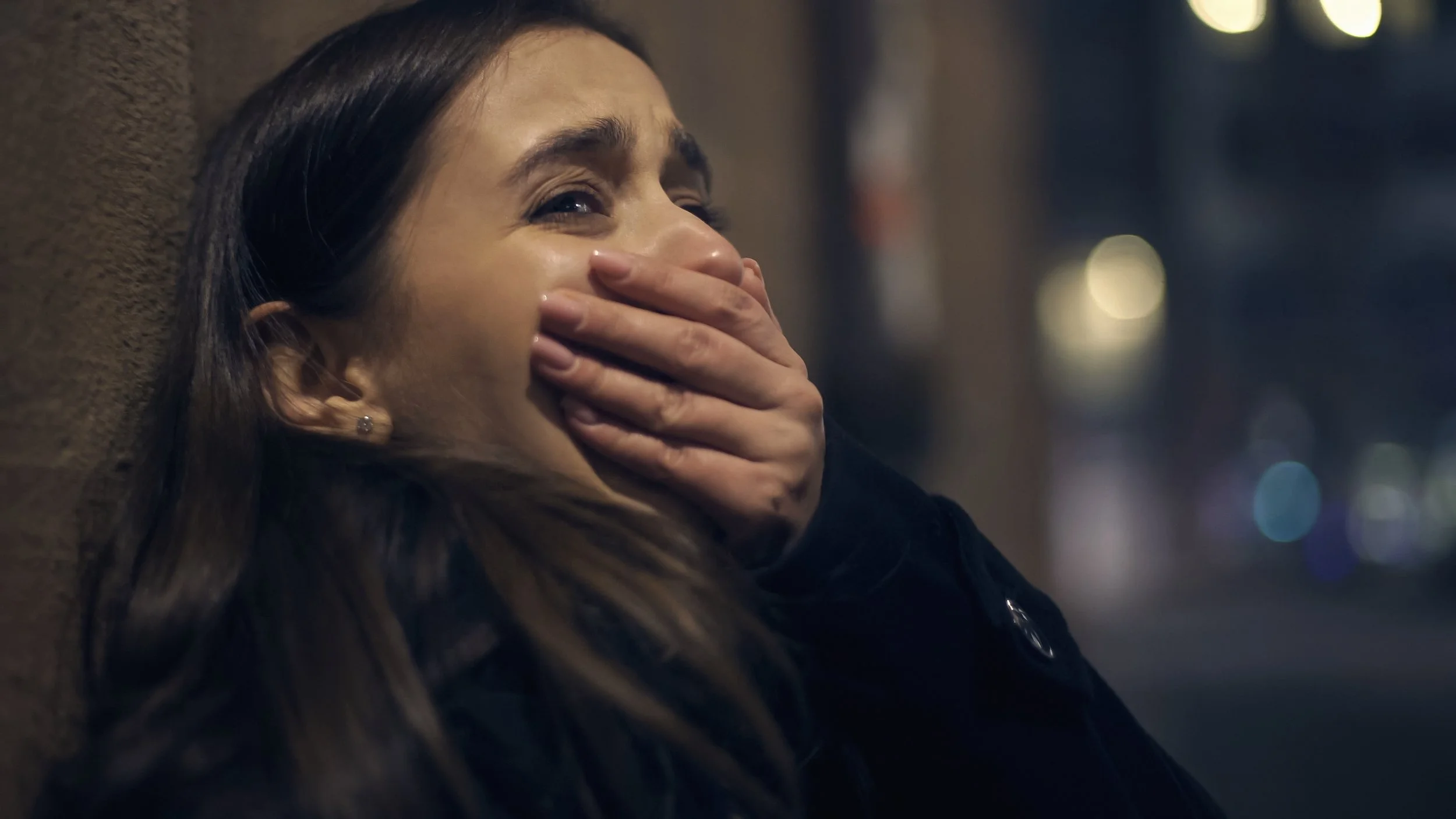
Whether your character is believed or not will be down to the world you’re building. If women are generally empowered she may have an easier time confiding in people. If the world is heavily patriarchal, she probably won’t be believed and she will already have internalised a lot of anxiety and self-doubt. I.e., because women are raised to expect/prepare for it, she should’ve seen it coming or somehow not allowed herself to get into that situation in the first place.
The more empowered women are, the more they’re able to recognise and communicate injustice, so think of it on a sliding scale from:
She will be blamed and punished for this - to - He will be blamed and punished for this.
Work out where your world sits and pitch her ability to speak up and/or seek justice accordingly. It’s no good writing a heavily patriarchal world, and then thinking that in order to portray “strength” she must speak up immediately. If your world would punish her for that, it’s unlikely she would. This doesn’t make her weak, it makes her a survivor.
Glorifying the Perpetrator
If your description of the perpetrator dwells on his charisma, charm, attractiveness, or the tragedy of his backstory, you’re probably glorifying him. Let’s face it, charisma, charm and attractiveness are all aspirational qualities, and a tragic backstory can trigger sympathy. This gloss can transform a reader’s perception from:
“He did a horrific thing to a human being. I am disgusted and there is no excuse.”
To:
“He’s a really great character with a lot of trauma. The fact that he did a bad thing… I mean… I can see how it happened.”
Don’t do this. We’ve seen enough of it over the years. The fact is, perpetrators of sexual violence take human beings and use them for their own gratification. They intimidate, coerce, and use physical strength and violence to get what they want. No amount of backstory can excuse it. Zero.
Trigger Warnings
I hear a lot of people complain about including trigger warnings in their work. I hope that having read this you’ll agree that a little heads up at the start of a book isn’t too much of an ask. For many survivors it simply means being mentally prepared and shielded when the narrative event takes place, as opposed to preventing them from reading it in the first place.
If you’ve got this far and you still think that a survivor of sexual assault is “making a fuss” or “being dramatic” when asking for a trigger warning, then I’m going to say you should definitely not write sexual assault into your novels. Because if you lack the empathy to include a warning for those who have endured it in real life, you certainly lack the empathy required to write it well.
Conclusion
If you are writing sexual assault, start with respect and empathy and go from there. If you’ve made it this far in the article, there’s a chance you’re taking it seriously and that’s a very good sign. This is a subject where you need to think first and write second, and if you can’t be bothered to do that, then don’t write about it at all.
* In 1991 rape in marriage was made illegal in the UK. Up until that point there was a common law exemption based on the concept of “irrevocable consent”, where a wife consented to all future sexual activity at the point of marriage. Historically, a wife was viewed as the husband’s property, and therefore rape - an act of subjugation - didn’t count, as she was already his subject/property.
** Think about that next time you see a play park full of children, or you're standing at the school gate. Statistically speaking, in the average classroom, there are multiple children who have lived or are living through that nightmare.
** I personally know a woman who always wears her hair short. The reason? When she was a teenager a group of boys on a late-night bus set her hair on fire. She went to the bus driver for help and he promptly put her off the bus rather than confront the boys. This happens all the time.
More from the series…
Writing Female Characters - Things to Remember
Writing Female Villains - Things to Remember
How Women React to Men: Female Characters - Things to Remember
Female Characters in Crisis - Things to Remember
Writing Female Characters - What Happened to Bix?
Writing Wives - Things to Remember