Writing Wives - Things to Remember
I see a lot of posts highlighting examples of male writers getting descriptions of female characters wrong. Of male writers falling back on tired sexist tropes that place women as props in the male MC’s storyline. But in a world where it’s quite possible to read works only written by men… and I must stress here the importance of diversifying if you haven’t already… it can be difficult to know how NOT to do those things.
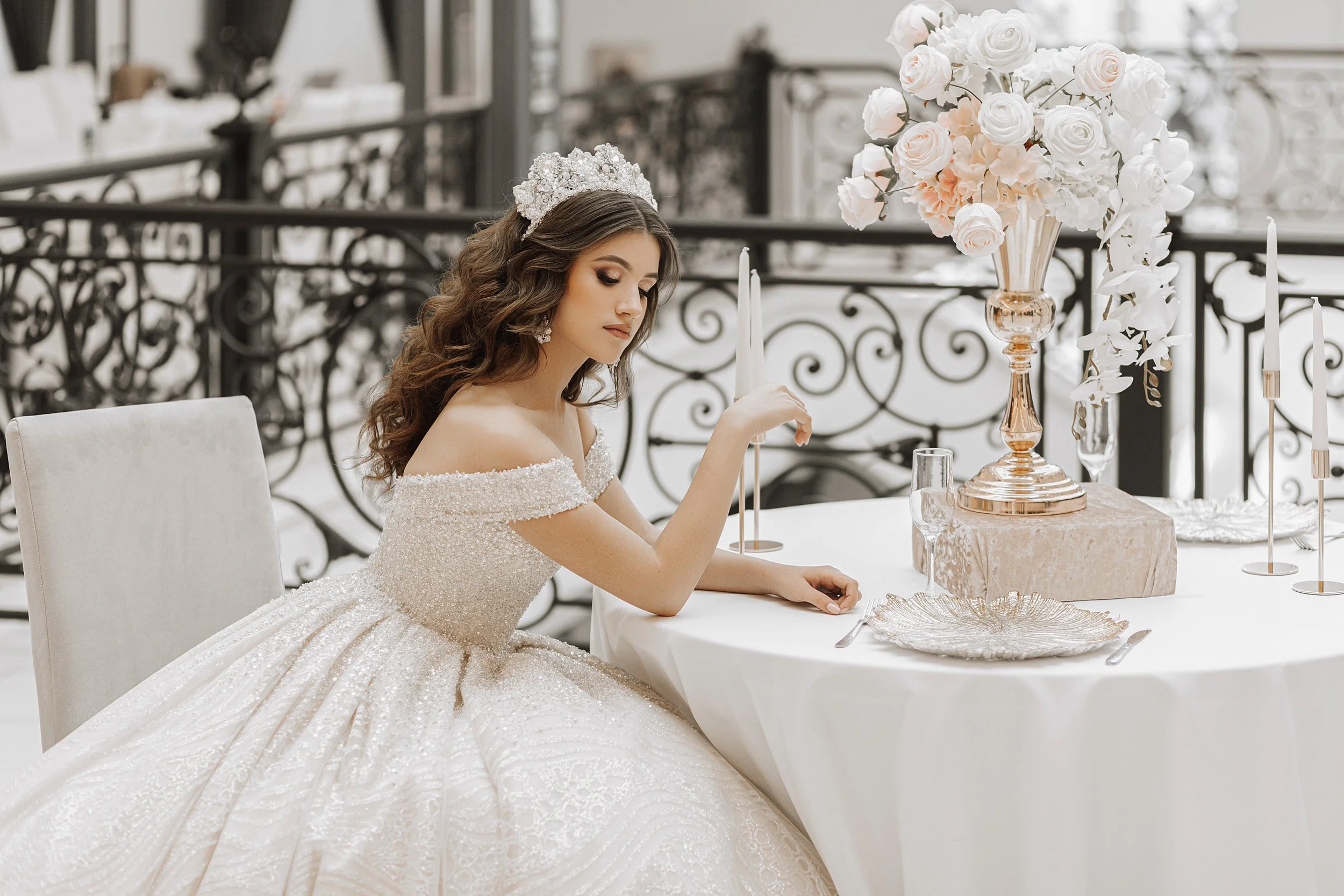
In this installment we’re going to look at wives and, more importantly, how to inject character into the person behind the title. Wives often form background depth to male protagonists and as such they can be treated as little more than narrative wallpaper. But as writers we should always be aiming to make every character a well-rounded human being.
After all, your male character married that person for a reason. So why her? What was it about her that inspired him to take that step? It could be ancient history to your characters, but it’s very important context when it comes to framing them and the relationship dynamic in the present.
It’s easy to build depth and colour into your characters and all of it can be added in the editing phase. So let’s look at some key pitfalls and, if you recognise them in your own work, what you might consider doing differently.
The Domestic Goddess
She cooks, she cleans, she raises the kids. She is the domestic bliss your male MC (main character) arrives home to after a long day doing whatever it is he does. She greets him with a smile and kisses him on the head as she serves dinner or fetches a drink. She is the healing balm to his worried brow.
Nobody is like this. Well, nobody believable anyway. Because even if a walking talking thinking human acts in this way, there are unseen currents churning beneath the surface. People are complicated and prone to frustration. They are passionate and creative. They need intrigue and self-interested motivation and interest.
I say self-interested motivation here deliberately. Often the motivation behind female characters can be boiled down to “supporting the male MC’s story”. If any of your female characters are only there to support a male character or, if she’s a villain, bring him down, you need to rethink your angle because nobody is that selfless. Everyone has an independent selfish reason for doing what they do (even if they don’t realise it).
How to fix it:
Give her interests. Give her goals. Give her flaws. If her absolute ambition is to be the best wife a man could wish for… why? Where did that come from? Is it something that causes her anxiety? Is she frustrated when he doesn’t respond like the perfect husband? What does she plan on doing after the kids leave home? Can you drop signs of future ambitions into your internal commentary or physical descriptions of the house? Perhaps there are books about business on the coffee table. She might write a blog or have a novel half-written.
If she helps him with his work, is she making a serious contribution? If so, make sure your MC recognises that. Make sure he respects her input.
Don’t make her a Betty Draper - Mad Men. Make her an Elena Richardson - Little Fires Everywhere. Make her a Bree Van de Camp - Desperate Housewives, who turned her incredible domestic culinary skills into a profitable business. Scratch beneath that veneer and make sure you have a character deep enough to care about. MC or not, it should make no difference.
The Accomplice
In True Lies, Helen Tasker (Jamie Lee Curtis) is a wife and mother in a boring job. She’s married to a secret agent, Harry Tasker (Arnold Schwarzeneger), but doesn’t know it. He’s hidden the truth from her, wrongly presuming that she’s better off living a normal life. But that life is a lie.
The situation is turned on its head when Harry discovers that Helen is flirting with the idea of having an affair with a man who’s pretending to be a secret agent. Because she’s bored and lonely and frustrated. So he intervenes and gives her a “mission” and it turns out she has more to offer than he expected.
By the end of the movie they’re working together on a regular basis. Their marriage is happier and healthier and, vitally, he is no longer lying to her or presuming to know what she wants.
In Breaking Bad, Skyler White finds out that her husband, Walter White, cooks and sells meth. She surprises him when she opts to become his accomplice. Instead of calling the cops and blowing the whole operation she joins him and starts laundering the money.
The accomplice is a great way to play the wife-character, BUT:
Be careful:
Make sure she’s supporting him of her own free will and for her own reasons. She should be more than a tool for him to use, so if her reasons are purely along the lines of “I’m helping him because he needs me”, then think again. Make her goals align with the organisation, not the man. Give her a serious job to do. Make sure she has an actual effect on the situation as a whole. Give her moments where her decisions make a positive contribution.
The Arranged Marriage
Arranged marriages are fraught with potential drama. After all, relationships are complicated and going from zero to forever is a lot. Related emotions can be complicated and diverse and contradictory. It’s possible for someone to enter an unknown situation, with a bucket-load of expectation, feeling both joyful and frightened.
So let’s start with the positives. A woman can willingly go into an arranged marriage for a number of reasons, including but not limited to: safety, financial security, power, and freedom. Men can benefit from an arranged marriage in exactly the same ways. It’s not always about ownership, it can be about partnership and the social benefits a union can bring.
A woman can also agree to an arranged marriage for honourable reasons. In Tasha Suri’s Empire of Sand, Mehr is coerced into marriage and heroically accepts the offer, saving her family in the process. She and her husband, Amun, become a team, building a solid basis of trust and working together in the face of great danger for the benefit of their people.
So think about the circumstances and don’t mistake an arranged union for a lack of choice or power.
Of course, arranged marriages can be less positive. Game of Thrones is full of examples, all of them involving nobility, most of them political, many of them tense in some way or other, so if that’s your angle it’s a good place to go for inspiration. As is history. Nowhere provides more interesting examples of political marriages than the history books. And what makes them interesting? The fact that very few of the women were meek and docile in the role.
For example, Georgiana, Duchess of Devonshire, married at sixteen having only met the Duke once. Within her dreadful and abusive marriage she found her own power and used her influence to bring crowds to political rallies and steer elections. Amongst it all, she grew up to become a societal figurehead.
Not all arranged marriages, however dysfunctional, end with the wife being murdered or locked in an attic. Killing her off or locking her up is easy. Giving her room enough to be real, is interesting.
How to fix it:
If you have an arranged marriage in your story, first ask yourself if her reasons for going into it were active or passive. If there’s a chance to introduce agency where there currently isn’t any, do it.
If she is trapped by her circumstances, where are her limits and how does she push them? If she doesn’t, then find ways to fix that. Perhaps she notices things he’s been letting slip and gets him to pay attention? Perhaps he’s been wallowing in self-pity and she gives him the tough love he needs? If you’re writing in a traditional fantasy setting, perhaps she’s more capable with animals than your male character expected? Can she slaughter a pig and tame a horse? Negotiate with nobles or navigate economic uncertainty?
Make her an actual human with skills and personality… and for the love of all things holy, make her more than a vessel.
The Bridal Sacrifice
These scenarios are very common in fantasy stories that centre on female characters. The young woman begins as an idealistic princess prepared to do her bridal duty in some kind of arranged union, only to discover that he’s a monster. This could be a figurative monster, or a very literal monster. For example, in I Am Dragon, the male love interest, after kidnapping the female MC, periodically turns into a dragon.
Once caught in this situation she sets about taming/fixing him. With persuasion, sympathy, and angelic levels of patience, she calms his inner turmoil and after the appropriate number of trials and tribulations they live happily ever after.
So what’s wrong with this?
We’ve seen it a hundred times before, and it feeds into the damaging narrative that abusive relationships are acceptable because it’s possible for the woman to “fix” the man. In short, this narrative is far too many women’s reality, and it rarely ends well.
How to fix it:
Either make the story dark and gritty and lean into the horror, or have her leave him. Get her out of there and give him the shock he needs to do the emotional fixing on his own. Because men can do that. Pride and Prejudice endures in popularity because Elizabeth turns Mr. Darcy down and he does some serious soul searching. He works on himself and becomes a better man and only then does Elizabeth say yes. Vitally, she does not sacrifice her body, mind, and soul to do the emotional labour for him.
Get her out of there, give him the crisis needed to shock him into action, and let him turn his own story around.
The Trauma-Related Divorce
So your male MC has been through a trauma. He throws himself into work in an effort to solve or avoid the issue, neglects his home life and ends up losing his wife as a result. He then spirals into a pit of despair (usually alcohol is involved) and a few years later our story opens. It’s a classic setup. Moody washed-up man, hiding brilliance behind an alcohol addiction, is dragged into a new thing (usually by a young woman) and ends up finding purpose once more. Along the way we uncover details about his life and the events that led him to be in this mess in the first place… key among them was the moment his wife left.
This is usually summarised by a brief argument focused on his shortcomings, after which she leaves with a final: “I just can’t do it anymore, Richard!”
He then opens a bottle of whisky and gets blind drunk.
If you’re recognising this setup it’s because it’s very common - especially in detective stories.
The problem with it is that she is just another thing on a list of misfortunes to befall your male character. The divorce happens and he ends up wallowing in self-pity. She performs a function and shows herself out.
How to avoid it:
These situations are often framed in a very passive way. Both parties allowed the marriage to fall apart. He withdrew, she sulked, she left, he drank. So try introducing mentions of actions that were taken to keep the marriage going before it fell apart. Mention counselling. Mention times when she showed up at his work with dinner and tried to connect. Mention times when he went home early at a pre-agreed time, only for him to be distracted/resentful because he wasn’t able to work on his thing. Mention times when he did get home on time only to find that she’d gone out, because she assumed he’d forget again.
Better yet:
Give her her own symptoms of grief and/or trauma responses. Does she spiral into depression as well? Does she end up spending time away from home trying to find the support he’s failing to provide? Does she throw herself into her own career, pulling away in a similar fashion to your male MC?
Small mentions of this, threaded into your story, will add a lot of depth to your MC’s backstory, and will prevent your “wife” from being an outline where a character should exist.
The Dead Wife
This is similar, but more drastic and tends to feature less alcohol. Grief leaves him a shell of a man and, with nothing to lose, he sets out on a new adventure. Usually he takes some persuading - see Kingdom of Heaven and Up, sometimes it’s vengeful - see Dr. Strange in episode 4 of What If?, The Fugitive, and Gladiator and other times it’s a passive need to escape - see Severance.
This clean break leaves your MC free to pursue his own interests while giving him the sympathetic past he needs. He can be as reckless as he wants, as aggressive as he wants… as ambitious or damaged or rebellious as he needs. All is forgiven. He lost his moral compass/need for self preservation when she died.
Think hard…
Killing-off the wife is a time-honoured trope and it’s pretty lazy. It basically negates any need to give her a personality. She becomes an idea… a symbol. She is a “presence” in his darkest moments but we don’t know anything about her and we don’t need to. She was “wife”. That enduring symbol of comfort and support and selflessness. So selfless she doesn’t have a self. In fact, she doesn’t even need to be alive.
Even if your wife-character is absent, she needs to have been a living, breathing self-supporting person in her own right - and your MC should remember her in that way. Warts and all.
Alternatives:
Can she be absent for another reason? Can he be starting his adventure after a different incident? If you think his actions wouldn’t be acceptable under any other circumstances… perhaps examine his actions. If it’s a killing spree… does one death ever actually excuse it?
Think about ways in which she might be alive and active elsewhere. Perhaps after their village was destroyed by monsters your male MC rode off to hunt the beasts while she rode the other way to warn the next village and help them prepare. Perhaps she was in a position of power and actually sent him on the quest. Perhaps they’re “on a break” and he’s working out his feelings on a journey. Perhaps at the end they reconcile. Perhaps they don’t. Either way, they’re independently exploring and that’s more-than fine. In all of these scenarios, she is a strong character in her own right, even if she’s not in his story at the moment, and just knowing that can be enough to strengthen your entire setup.
Vitally, in none of these scenarios does she need rescuing. She’s not sick, and his motive isn’t based on finding a cure. She’s not kidnapped and helpless without him.
There are so many reasons for two people to plausibly go their separate ways without killing one off or needing to rescue them. Look at your wife-character and ask yourself who she is. And then ask yourself… “if she lived, what would she be doing?” and if your first thought is something really demeaning or horrific or anything that would require male intervention… have another go.
The Frigid Wife
This one is as old as the hills so I’m not going to dwell on it for too long. The wife who denies her husband sex for apparently no reason is damaging on so many levels.
It suggests that as soon as a man gets married he “loses” something, and that loss affects his manhood.
It reinforces the damaging idea that it’s a woman’s job to say “no”. This feeds into the casting of promiscuous women as villainous, because she’s either trying to trap him in a marriage (at which point she’ll no-doubt deny him at every turn), or she’s not “wife material” and therefore, according to tradition, a failed woman.
It reinforces the damaging idea that men always want sex. This assumption continues to shut down acknowledgement of trauma when men are victims of assault. In Season 4 of The Boys, Hughie is sexually assaulted multiple times. The first time it’s not acknowledged, the second and subsequent times he’s blamed for it. This needs to stop.
It’s blatantly false. Women want sex. Especially when sex is good. If she doesn’t want sex, perhaps your male MC should be looking at what he’s not doing to keep her interested, because if he can deliver she’ll be up for it. Which leads to…
It assumes that any breakdown in marital sex is the fault of the woman, not the man. But, it takes two to tango, so stop blaming her and take a look at him.
If you’ve written a “frigid wife”, assess your motives. Was it on purpose or were you copying the numerous examples of this dynamic in TV shows and movies? If it was on purpose, why?
How to fix it:
If it’s important that she is this way, then make sure you present a balanced view. There has to be a reason. Has she been through a trauma? Has there been a breakdown in the marriage somewhere, leading to her withdrawal? Is he distant and uncaring about it? Whining about her refusals instead of inspiring her desire?
Think about this from her point of view and challenge your own assumptions.
The Mum-Wife
This one is mostly seen in sit-coms so I doubt it’s going to be a problem, but just in case…
The “mum-wife” takes care of the kids and the husband, who is basically a child himself. She holds the family together while he bumbles his way through life somehow managing not to break anything on the way. He almost does, of course, but she’s there to prevent things from going too far and to pick up the pieces when it all goes wrong.
This one isn’t flattering to either party and I don’t get why it’s so common. In these scenarios, she needs to grow a backbone and insist he pulls his weight and he needs to stop being another drain on her time and energy.
The fact is, if your book is meant to entice female readers, it’s likely this dynamic will exhaust them. If it’s for male readers it’s insulting. Either way you’re not winning.
The Harpy
A close relation to the “mum-wife”, the “harpy-wife” rules her hen-pecked husband and home with an iron fist. She is the military General of the domestic sphere. She keeps him in line and, ultimately, is an obstacle that must be overcome for any adventuring to take place. Phrases like, “I have to get permission from my wife”, are synonymous with the “harpy”.
Now, to the casual observer the “harpy-wife” might come across as “strong”, but it’s ultimately not the intention. This dynamic is almost always played for laughs and is based on the idea that in a marriage there’s a power dynamic, and he should be on top.
Ultimately the “harpy-wife” reinforces the tradition that men are natural leaders and when a woman takes control it’s “wrong” or simply “funny”.
How to fix it:
If your male MC is in a relationship like this, look at ways in which you can make him an equal player. Set up glimmers of his compliance. Perhaps it suits him to follow her lead because he agrees with her direction? Perhaps, beneath the surface, they’re accomplices?
In Chicken Run, Mrs. Tweedy is the villainous powerhouse, but her husband has his own motives for villainy. For her, it’s business. For him, it’s personal. Either way, they’re in it together.
The Second Wife
Oh the classic gothic set-up. The heroine is haunted by the wife that came before. Either she’s dead and causing the new wife’s downfall (Ligeia - Poe), or dead and worshipped by others, to the point that the new wife feels increasingly diminished by her memory (Rebecca - Du Maurier), or she’s still alive somewhere - probably in an attic (Jane Eyre - Bronte).
These may seem like melodramatic examples, but they can take subtler form:
When a male character remarries and she faces hostility from family members, including children. This version of the “second-wife” will spend a good deal of her time “making-up” for the fact that she is not her predecessor, haunted by the shoes she’s trying to fill. He tells her it doesn’t matter what anyone else thinks… but she sees disapproval in all their eyes.
When the ex-wife is still on the scene, constantly undermining the new wife and trying to win the husband back.
When the male character still has pictures of his dead wife everywhere.
How to fix it:
These dynamics are loaded with tension and conflict and provide rich ground for storytelling. But there are a couple of things you need to look out for:
Make sure both women are well rounded
Know their good points and their bad
Know why they’re doing what they’re doing
If your female character is facing disapproval from family members, is she really enduring the situation for love? Or is she actually proud and competitive and wanting to claim victory over her predecessor? That underlying mentality could feed into more than just the way she navigates the family dynamic.
An exercise:
There’s a great exercise in character development related to motive and I heard about it through an amazing writer called Greg Buchanan. It comes down to spotting the difference between what the character wants, and what they actually need. Vitally, the character will probably be unaware of the second.
For example: in Succession, Shiv Roy (Sarah Snook) wants her father’s approval, but what she really needs is to strike out on her own and leave the toxic family firm behind. She never fully realises this but it underpins a lot of her internal conflict.
With this in mind, a husband might want a new wife, when what he really needs is to shed a bunch of family expectations and work things out for himself. This being the case, how does that underlying reality affect his interactions? It could change everything.
Conclusion
However you represent your “wife character” make sure you do it with integrity and purpose. The role of “wife” is not a characteristic, it’s a title. She is/was more than an idea or symbol. She is/was a human being with her own motives and passions. If you’ve written your book and you’re now realising she’s still the placeholder you put down just to support the plot, now’s the time to fill in the gaps.
Don’t worry.
Well do worry. Worry enough to do something about it, because your story will be stronger for it. But don’t worry that you’ll do a terrible job. The fact is that if you think about what’s been said here and you apply the questions raised above with honesty, you’ll be well on your way.
More from the series…
Writing Female Characters - Things to Remember
Writing Female Villains - Things to Remember
How Women React to Men: Female Characters - Things to Remember
Female Characters in Crisis - Things to Remember
Writing Female Characters - What Happened to Bix?
Writing Wives - Things to Remember